

Anxiety & Stress
When Your Nervous System Stays on High Alert.
Persistent stress can affect sleep, focus, muscle tension, and how your body feels day to day. Understanding how the nervous system responds to stress — and identifying accompanying physical findings — helps guide a thoughtful, individualized approach.
Overview
More Than a Feeling.
Stress is the body's response to demands and perceived threats. Short-term, it is protective. When it becomes persistent, it can affect nearly every system — and anxiety can involve both emotional and physical symptoms.
Many people living with ongoing stress also notice neck and shoulder tension, headaches, disrupted sleep, or a sense of being physically “wound up.”
Muscle tension
Neck, shoulder, and jaw tension commonly accompany ongoing stress.
Sleep disruption
Difficulty falling or staying asleep can leave you feeling unrested.
Headaches
Tension-type headaches and neck discomfort frequently overlap with stress.
Focus & energy
Concentration, mental clarity, and energy may be affected.
The Brain–Body Connection
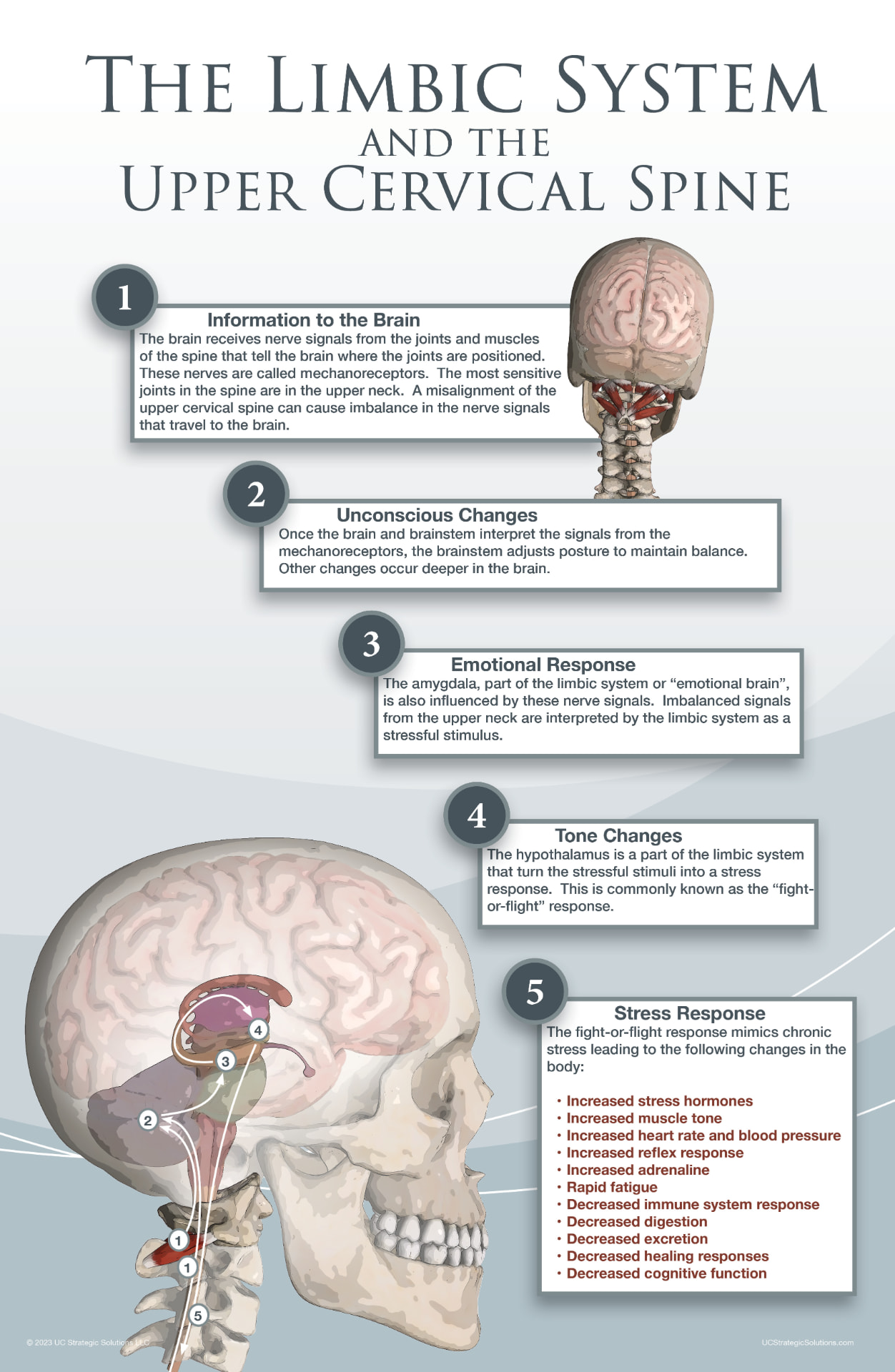
The Limbic System & the Upper Cervical Spine
The brain is constantly receiving information from the body. Sensory receptors in the muscles and joints of the upper cervical spine provide important information about head position, movement, and muscular activity.
This information is integrated with other sensory signals throughout the central nervous system. These networks interact with brain regions involved in balance, body awareness, emotional processing, and physiological stress regulation.
Understanding these connections offers an important perspective on the relationship between cervical function and the nervous system.
Anatomy & physiology
How the Body Responds to Stress.
The autonomic nervous system regulates heart rate, breathing, digestion, and many other automatic functions. Its sympathetic branch prepares the body for action; its parasympathetic branch supports rest and recovery.
Brain regions, the brainstem, and hormonal pathways such as the hypothalamic–pituitary–adrenal axis coordinate this response. When stress is prolonged, the balance between activation and recovery can shift.
Sympathetic activation
Increased heart rate, breathing rate, and muscle readiness prepare the body to respond.
Parasympathetic recovery
Rest-and-digest activity supports recovery; the vagus nerve is a major contributor.
Brainstem integration
Brainstem networks help integrate autonomic signals with sensory input from the body.
Stress is not only in your head — it is a whole-body response coordinated by the nervous system.
Cervical & neurological relationships
Where the Neck Fits In.
The upper cervical region sits next to the brainstem, where many autonomic and sensory pathways are integrated. The neck's joints and muscles also provide continuous sensory information to the nervous system.
Researchers have explored relationships between cervical input, autonomic measures, and stress, but these remain developing areas of study. What is well established is that neck pain, tension, and headaches often accompany stress — and that these physical findings can be evaluated.
Accompanying neck tension
Persistent muscle guarding can contribute to neck pain, stiffness, and headaches.
Sensory input
Painful or poorly functioning cervical structures add to the body's overall sensory load.
Sleep and recovery
Physical discomfort and disrupted sleep can increase the daily burden of stress. Understanding these relationships helps shape the examination.
Our role is to evaluate cervical movement, tension, and sensory function within your broader care.
Explore upper cervical careThe evaluation
Looking for Meaningful Findings.
Evaluation first establishes whether chiropractic care appears appropriate. Required imaging and measurements precede an initial adjustment.
History & clinical examination
We review your symptoms, their onset and pattern, injuries, neck complaints, and daily function — and determine whether chiropractic care, further medical assessment, or both are appropriate.
CBCT structural analysis
CBCT shows upper cervical bony anatomy in three dimensions, informing individual structural analysis. X-ray analyzes other spinal regions being evaluated for adjustment.
NeckCare functional assessment
Range of Motion assesses cervical movement. Joint Position Error assesses repositioning accuracy. The Butterfly Test assesses movement tracking and sensorimotor control.
Additional objective findings
When relevant, thermography records skin-temperature patterns, postural analysis documents alignment, and balance assessment evaluates proprioceptive function and postural stability.
Structural analysis and functional measurements help us connect individual cervical findings with your symptoms and daily activity.
What to expect
Care Based on Findings.
When an upper cervical adjustment is appropriate, it is guided by your anatomy, examination findings, and structural analysis. We then reassess relevant findings and monitor changes in neck function, comfort, and daily activity.
Specificity
Gentle, specific adjustments are based on individual upper cervical anatomy, examination findings, and structural analysis.
Reassessment
Clinical findings are reevaluated to determine whether further adjustment is indicated.
Individualized progress
Progress is considered through relevant functional measures and your experience of daily life over time.
Anxiety and chronic stress often benefit from support from mental health professionals and your medical provider, along with sleep, movement, and stress-management strategies. We coordinate with other healthcare professionals when needed.
When to seek urgent medical help
If you are having thoughts of harming yourself, call or text 988 (Suicide & Crisis Lifeline). Chest pain, difficulty breathing, fainting, or other sudden severe symptoms require emergency care — call 911.
Your next step
Start With a Closer Look.
We evaluate cervical structure, movement, and accompanying symptoms to identify meaningful findings and guide care around your individual needs.
Want to Get In Sooner?
Looking for an earlier new patient appointment? Give our office a call and ask to be added to our cancellation waitlist. If an earlier appointment becomes available, our team can reach out to you.